This article explores the 20 safest cities and towns in the UK, and why these locations continue to outperform larger urban centres.
29/04/2026By Sunil Chander · Co-Founder
For many buyers and renters, safety is one of the most important factors when choosing where to live. Crime levels influence quality of life, insurance costs, long-term property values and community stability. Identifying the safest places to live can play a central role in residential and investment decisions. This article explores the 20 safest cities and towns in the UK, and why these locations continue to outperform larger urban centres.
How safety is measured in the rankings
The rankings provided by Security Journal UK assess safety using recorded police crime data per 1,000 residents. The two core measures are:
Violent crime rates, covering offences such as assault and robbery
Property crime rates, covering burglary, theft and criminal damage
Cities and towns that perform consistently well across both categories are identified as safe places to live.
The 20 safest places to live in the UK
1. Harrogate
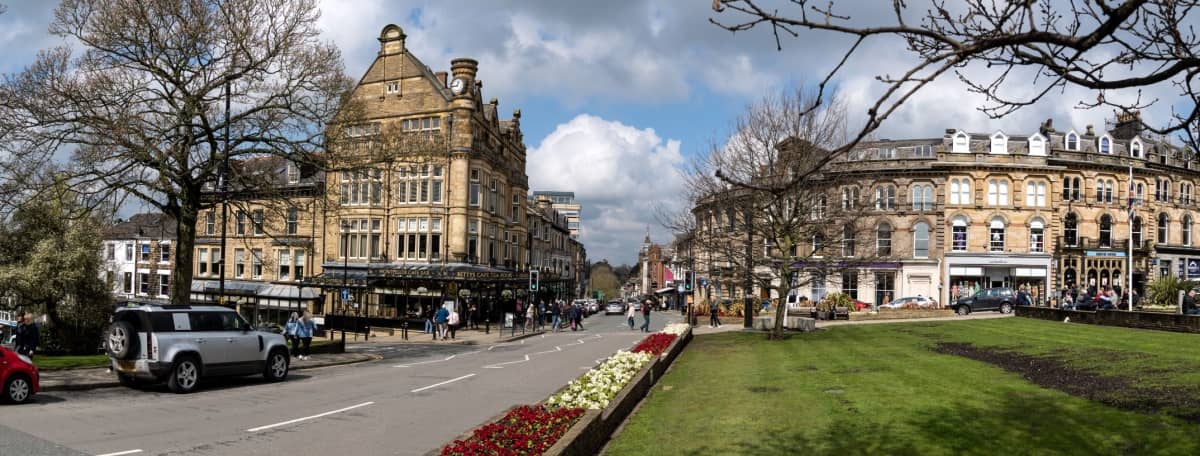
Harrogate tops the list as the safest place to live in the UK, with a crime index score of around 17.44. This North Yorkshire spa town combines low violent crime rates and low property crime rates with well-kept parks, compact residential areas and strong community cohesion that helps deter anti-social behaviour.
2. Wokingham
Wokingham, in Berkshire, ranks second with a crime index of about 20.17. Traditionally a market town and now a prosperous commuter hub for Reading and London, it has strong schools, family-oriented neighbourhoods and crime levels that remain low for a town of its size.
3. Chester
The historic walled city of Chester is third with a crime index of 21.56. Though a significant regional centre, crime figures are modest in comparison with larger urban areas, with relatively low incidents of both violent and property crimes.
4. Sevenoaks
Sevenoaks in Kent appears fourth with a crime index of 21.62. Situated within commuting distance of London, it offers more suburban surroundings and consistently low crime across most categories, making it one of the recognised safe places to live in England.
5. Horsham
Horsham, in West Sussex, ranks fifth with a crime index of around 22.48. This market town benefits from stable residential areas, low violent crime rates, low burglary figures and a strong sense of safety among residents.
6. St Albans
St Albans comes sixth with a crime index of 23.52. Despite being a small city with a busy high street and cathedral, its crime index remains significantly lower than most urban areas, supported by strong community services and public spaces.
7. Salisbury
The cathedral city of Salisbury is seventh with a crime index of 23.66. With well-maintained central areas and active local communities, it records relatively low levels of violent and property crime.
8. Windsor
Windsor is eighth on the list with a crime index of approximately 24.51. The strong policing presence associated with the royal residence and well-managed public spaces helps keep crime levels low despite high visitor numbers.
9. Guildford
Guildford in Surrey is ninth with a crime index of 25.21. As both a county town and university centre, it maintains a safe profile thanks to visible policing, good transport links and affluent suburbs.
10. Lincoln
Lincoln has a crime index of 25.59. This cathedral city and university centre has modest crime levels relative to other urban areas, with visible CCTV and active local policing contributing to its safety.
11. Norwich
Norwich ranks 11th with a crime index of around 26.06. Known for its well-preserved centre and relatively low violent crime rates, this East Anglian city remains among the more secure urban areas in the UK.
12. Bath
The combined authority area of Bath and Northeast Somerset sits 12th with a crime index of 26.53. Bath’s historic centre attracts many visitors but still manages to maintain low crime figures in residential areas.
13. Bangor
Bangor in Gwynedd, North Wales, also has a crime index of 26.53, tying with Bath. This small university city combines coastal scenery with low violent and property crime levels.
14. York
The walled city of York appears 14th with a crime index of 27.13. Despite heavy tourism, York’s strong police presence and family-oriented neighbourhoods contribute to its standing as a safe place to live.
15. Chelmsford
Chelmsford in Essex ranks 15th with a crime index of 28.95. It is a fast-growing commuter city with significantly lower crime than London, attractive transport links and generally safe suburban areas.
16. Edinburgh
Scotland’s capital, Edinburgh, ranks 16th with a crime index of around 30.83. While central nightlife areas can be lively, most residential districts experience moderate crime levels and strong community engagement.
17. Cambridge
Cambridge appears 17th with a crime index of 38.54. It compares favourably with larger cities nationwide, with relatively contained serious crime despite busy student and technology sectors.
18. Brighton
Brighton ranks 18th with a crime index of approximately 38.86. As a major seaside destination with a dynamic cultural scene, some areas record higher city-centre activity, but many residential neighbourhoods remain calm and secure.
19. Exeter
Exeter appears 19th with a crime index of 33.29. As a regional centre for the Southwest, it maintains a manageable safety profile with lower violent and property crimes compared to larger urban centres.
20. Plymouth
Finally, Plymouth ranks 20th with a crime index of 40.65. It is a larger port city than many others in this ranking, so its crime index is higher, but overall, it still sits well below the least safe UK cities and presents many secure residential neighbourhoods.
What these places have in common
Across all 20 locations, several shared characteristics explain their safety performance.
Lower population density
Lower density reduces anonymity and discourages opportunistic crime. This directly lowers property crime rates.
Stable housing markets
High owner-occupation and long-term residency reduce transient populations, which supports lower violent crime rates.
Effective local policing
Smaller cities and affluent towns benefit from proactive community policing and rapid response times.
Limited high-risk environments
Fewer late-night venues, transport hubs and high footfall zones reduce exposure to crime.
Why safety matters for buyers and investors
For owner-occupiers, safety affects:
Family wellbeing
School catchment desirability
Insurance premia
Long-term resale value
For investors, safety influences:
Tenant demand
Rent stability
Void periods
Long-term capital growth
Cities that rank among the safest places to live in the UK often outperform less secure locations over time.
Understanding violent and property crime separately
A city may perform well on one metric but not the other. Low violent crime rates indicate strong public order and personal safety. Low property crime rates indicate lower burglary and theft risk. The safest cities perform well on both.
Why major cities rank lower
Large cities such as London, Manchester and Birmingham record significantly higher crime per 1,000 residents. Key drivers include:
High population density
Greater income inequality
Extensive transport networks
Concentrated nighttime economies
This does not mean all neighbourhoods are unsafe, but city-wide averages remain higher.
Choosing the safest place to live in the UK
Selecting the safest place to live in the UK depends on lifestyle and employment needs.
Families may prefer cathedral cities such as Winchester and York
Commuters may favour towns such as Wokingham and St Albans
Retirees may choose small and quiet areas such as Harrogate, Ripon and Chichester
Each combines low crime with a strong quality of life.
Conclusion
Based strictly on published rankings, Harrogate is currently the safest place to live in the UK, followed by a group of affluent commuter towns and historic cities that consistently record low violent crime rates and low property crime rates. For buyers, renters and investors, focusing on safety supports long term wellbeing and stable property performance. While no location is entirely crime-free, the cities listed here represent the most secure environments currently identified in national data.
FAQs
Q. What is the safest place to live in the UK?
A. Harrogate is currently ranked as the safest place to live in the UK based on national crime rankings.
Q. Are small towns generally considered safer than large cities?
A. Yes. Smaller towns consistently record lower violent crime rates and property crime rates.
Q. Why does safety matter for property buyers?
A. Safety affects quality of life, insurance costs, resale value and tenant demand.
Q. Are the safer places to live in England also more expensive?
A. High demand and stable communities often tend to support higher prices.
Q. How are crime rates measured?
A. Crime is recorded per 1,000 residents using police statistics.
Q. Do commuter towns rank highly for safety?
A. Yes, towns such as Wokingham, Sevenoaks and St Albans perform very well.
Q. Are university cities considered safe?
A. This depends on location, but, yes, some cities such as York and Cambridge maintain low serious crime levels.
Q. Can crime rankings change?
A. Yes, policing, regeneration and population changes can affect long-term trends.
Q. Should buyers use neighborhood data as well?
A. Yes, local area data provides more precise insight than city-wide averages.
Q. Is safety linked to capital growth?
A. Safer cities often tend to show stronger long-term housing demand.
Sunil oversees operations and compliance at Pauzible, drawing on his extensive experience as the founder and CEO of Dawnbud Limited, a financial services consulting firm. His prior career included senior roles in investment banking at Smith New Court and NatWest. He holds an MBA from LBS, M Litt from Oxford and a PhD from Cambridge.
Ready to see what Pauzible could unlock?
Explore how accessing equity from your BTL property could support your business investment plans.
No obligation. Just a clear view of what might be possible.