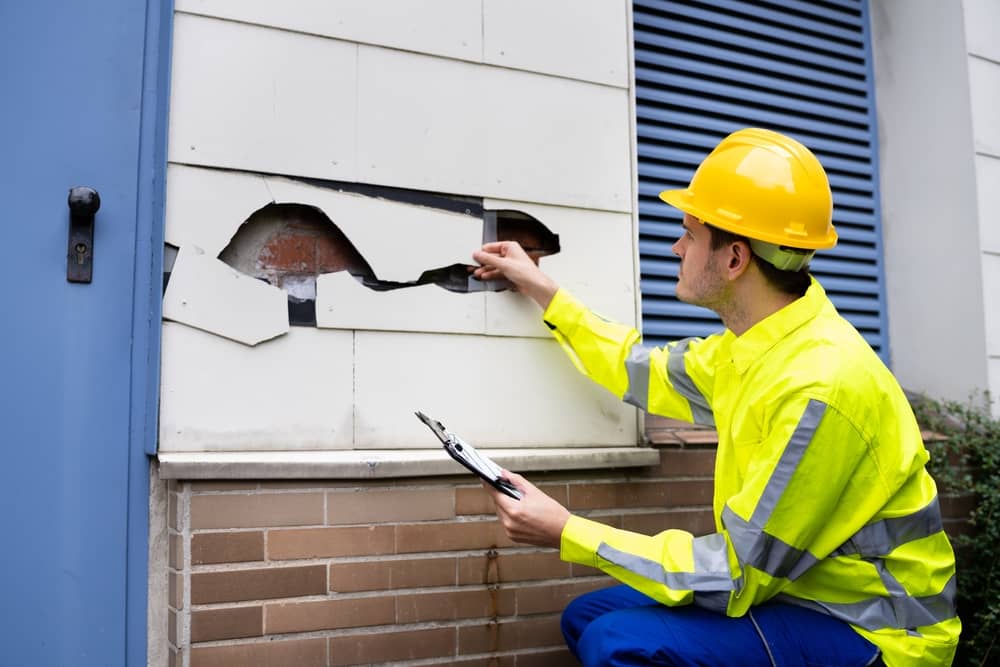
This article explores how landlords can set up a repair reporting process, covering legal obligations, response times, repair logs and contractor management.
14/08/2026By Sunil Chander · Co-Founder
This article explores how landlords can set up a repair reporting process, covering legal obligations, response times, repair logs and contractor management.
For private landlords, a repair reporting process is a legal necessity, not simply good practice. Under Section 11 of the Landlord and Tenant Act 1985, a landlord's repair obligations only “activate” once the landlord has been made aware of the issue.
Without a clear, reliable system for receiving and recording tenant repair requests, a landlord cannot demonstrate their knowledge about a problem, nor prove that they acted promptly or defend themselves if a disrepair claim is made. As such, it is essential to build a landlord maintenance workflow that is simple enough for tenants to use and robust enough to serve as a legal record.
Why does a formal repair reporting process matter legally?
A formal landlord repairs process matters because it establishes the evidential record that protects both parties in the event of a dispute. Landlord repair obligations do not kick in until the landlord or managing agent becomes aware of the issue within the property. As such, landlords must maintain a clear and easy-to-use channel for tenant repair requests. The sooner a report is received and logged, the sooner the legal duty to act begins, and the clock starts on any applicable timeframe.
Under the Renters' Rights Act 2025, the stakes are higher still. The Act extends the Decent Homes Standard to the private rented sector for the first time, bringing private rentals in line with standards already required in social housing. As such, clear communication channels and proper documentation are essential. Every repair request, response and completed job should be logged with dates and details, so that in a disrepair dispute, there is documentation to protect a defensible position.
What repair response times must landlords meet?
Repair response times depend on the severity of the issue, and landlords should plan around three broad categories. If your tenant reports an emergency hazard, you must make sure the home is made safe within 24 hours. Emergency repairs in rental properties include total loss of heating, severe leaks, dangerous electrical faults and any condition posing an immediate risk to occupant safety.
For serious hazards such as damp and mould, the Awaab's Law framework, now being adopted as best practice across the private sector, requires landlords to investigate within 14 days of being notified and to begin remedial work within seven days of completing the investigation. Councils and courts are already treating the 14- and seven-day timeframes as the benchmark for reasonable time in private rented sector cases, even before the formal regulations land in all areas.
For routine, non-urgent repairs such as a dripping tap or minor cosmetic damage, landlords should fix these within two to four weeks, with what is "reasonable" depending on how much the disrepair affects the tenant's safety, health or the property's habitability.
What should a property repair request form include?
A property repair request form is the first point of capture in any landlord repairs process, and its quality determines the quality of everything that follows. A well-designed form should require tenants to provide:
The date and time the issue was first noticed
A clear description of the problem
Which area of the property is affected, together with photographs where available
Indication of whether the issue poses an immediate safety risk
Tenant's preferred contact method for follow-up
Under the Deregulation Act 2015, letting agents and tenants must put repair requests and resulting actions in writing for new tenancies from October 2015 onwards, if they want to rely on the Act's protections. While it is not a requirement for reporting issues, it is considered best practice.
The form itself can be as simple as a shared email template or a structured online submission, but it should be given to tenants at the outset of the tenancy, clearly referenced in the welcome pack and accompanied by an explanation of what will happen once a report is received. Providing tenants with clear and easy methods for contacting you is vital. Identifying a problem early, before it escalates, can save significant time and money.
How should landlords log and track repairs?
A repair log template is the backbone of any effective landlord maintenance workflow, and it should be maintained consistently for every property, regardless of portfolio size. At a minimum, the log should record:
The date the report was received
The nature and urgency of the issue
The date of the landlord's response
The contractor appointed
The dates of any site visits
The completion date and associated costs
A record of the tenant's confirmation that the work has been done satisfactorily
A landlord maintenance checklist used during periodic property inspections, carried out every six months and properly documented, also forms part of this record. Regular inspections help identify minor issues before tenants report them, and a six-monthly property visit, properly documented, demonstrates proactive management. If a dispute reaches a tribunal or court, this complete audit trail is what demonstrates a responsible approach to property management.
How should landlords manage contractors within a repair workflow?
Effective contractor management is what makes a repair process smoother and relationships should be established before emergencies arise. As a landlord, you should know a reliable plumber, a Gas Safe registered engineer, a qualified electrician and a general maintenance contractor.
Contractors should be briefed on your expected repair response times and on the documentation required from them after each job, such as dates attended, work carried out and any follow-up work needed. Keeping contractor invoices and job sheets as part of the repair log also contributes to a complete audit trail that's invaluable in insurance or legal contexts, while reinforcing the overall integrity of your landlord maintenance workflow.
Conclusion
A robust landlord repair reporting process is the practical infrastructure that keeps a tenancy compliant and workable for both parties while maintaining the long-term condition and value of your investment. With the Renters' Rights Act raising standards for the private rented sector, building this infrastructure now is no longer a matter of preference and landlords must establish a reliable workflow for repairs in their rental properties.
FAQs
Q. When do landlord repair obligations begin legally?
A. Landlord repair obligations begin once the landlord or their managing agent has been notified of the issue, which is why a documented repair reporting process is legally important for both parties. The record of notification establishes when the duty to act was triggered and it forms the evidential foundation if a dispute arises.
Q. What counts as an emergency repair in a rental property?
A. Emergency repairs in rental properties include total loss of heating or hot water, severe water leaks, dangerous electrical faults, structural hazards and any condition posing an immediate risk to the health or safety of occupants. Landlords should respond to emergency repairs within 24 hours of being notified.
Q. What repair response times apply to private landlords?
A. Emergency repairs require action within 24 hours, serious hazards such as damp and mould should be investigated within 14 days with remedial work beginning within seven days of completing that investigation, and routine non-urgent repairs should be resolved within two to four weeks. Courts and local authorities are already applying these benchmarks when assessing whether a landlord's response was reasonable.
Q. What should a landlord include in a repair log?
A. A repair log should record the date a report was received, the nature and urgency of the issue, the date of the landlord's response, the contractor appointed, dates of site visits, the completion date, costs and tenant confirmation that the work is satisfactory. This documentation is your primary protection if a disrepair dispute reaches a tribunal or court.
Q. Do repair requests have to be made in writing?
A. Under the Deregulation Act 2015, letting agents and tenants must put repair requests and resulting actions in writing for new tenancies from October 2015 onwards, if they want to rely on the Act's protections. While it is not a requirement for reporting issues, it is considered best practice. Providing tenants with a standard property repair request form at the start of the tenancy makes this straightforward for both parties.
Q. What should a property repair request form capture?
A. A property repair request form should capture the date and time the issue was first noticed, a description of the problem and the area of the property affected, together with photographs where available, and an indication of whether the issue is an immediate safety risk.
Q. How does Awaab's Law affect private landlords?
A. Awaab's Law was introduced for the social housing sector, but its timeframes of 14 days to investigate a serious hazard and seven days to begin repairs are now being applied by courts and councils as the benchmark for reasonable response times in the private rented sector. Private landlords should treat these timeframes as best practice, regardless of where formal regulations currently apply in their area.
Q. How often should landlords carry out property maintenance inspections?
A. A six-monthly property inspection, properly documented and added to the repair log, is widely regarded as good practice for private landlords. Regular inspections help identify minor issues before they escalate and they also contribute to the evidence record that demonstrates proactive property management.
Q. What contractors should landlords have on their maintenance roster?
A. At a minimum, landlords should have established relationships with a plumber, a Gas Safe registered engineer, a qualified electrician and a general maintenance contractor.
Q. What are the consequences of failing to carry out repairs within a reasonable time?
A. A landlord who fails to act on a reported repair within a reasonable timeframe can face local authority enforcement action, civil claims for damages and rent repayment orders. Under the Renters' Rights Act 2025, a poor record of repair management can also weaken a landlord's position in possession proceedings.
About the author
Sunil Chander
Co-Founder
Sunil oversees operations and compliance at Pauzible, drawing on his extensive experience as the founder and CEO of Dawnbud Limited, a financial services consulting firm. His prior career included senior roles in investment banking at Smith New Court and NatWest. He holds an MBA from LBS, M Litt from Oxford and a PhD from Cambridge.
repair reportinglandlord obligationsRenters Rights Actproperty maintenancecontractor management
Ready to see what Pauzible could unlock?
Explore how accessing equity from your BTL property could support your business investment plans.
No obligation. Just a clear view of what might be possible.