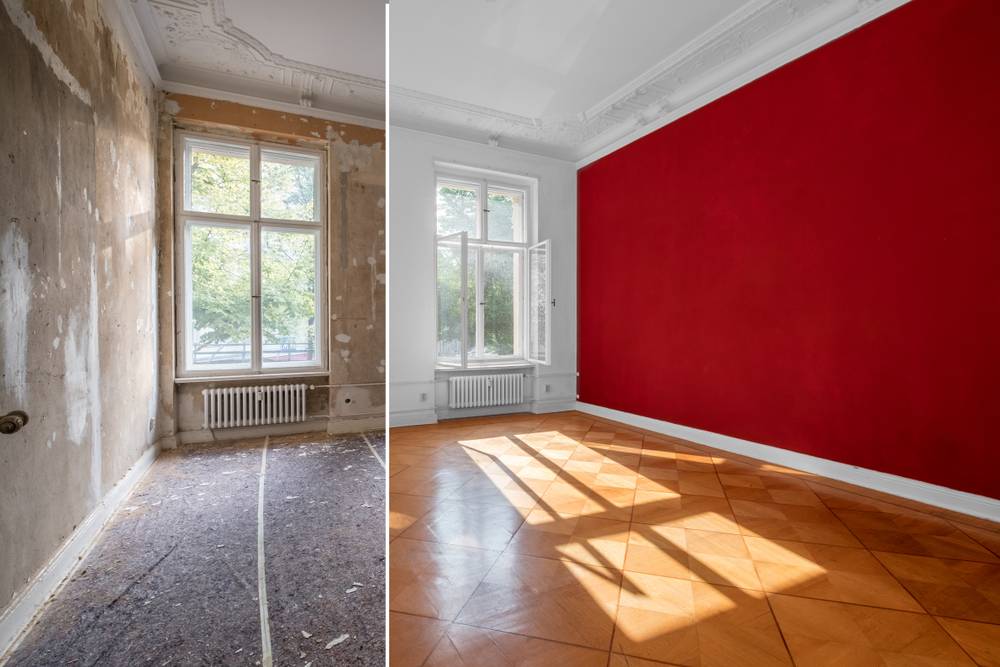
Renovation Mistakes Landlords Make That Reduce Rental Profit
This article explores some common renovation mistakes landlords make that can quietly erode rental profit, and how to renovate without overspending.
11/11/2026By Sunil Chander · Co-Founder
This article explores some common renovation mistakes landlords make that can quietly erode rental profit, and how to renovate without overspending.
Nobody wants to lose money on a refurbishment. Yet, much of what landlords spend on updates each year buys very little in return. Nearly one in five landlords say they have overspent on renovations that failed to lift either property values or rental income, which points to an important consideration. An improvement that looks impressive on completion is not always the one a tenant will pay more for in rent. This article explores the renovation mistakes that tend to come up repeatedly and how they can be avoidable.
Why rental renovation mistakes are so easy to make
What is essential for landlords to remember is that the local market sets the rent, not your specification. How much of any cost you can pass on depends on what tenants in your area will pay. An English Private Landlord Survey in 2024 revealed that among landlords who raised the rent at their most recent letting, 79% set it by reference to the local market rate. A kitchen that costs twice as much as the average for the area will not conjure up a tenant who will consider paying up to twice the average rent for similar properties in the area.
The most common renovation mistakes landlords make
Here are seven common errors behind wasted refurbishment spend:
1. Overspending on high-end kitchens and bathrooms
Overspending on high-end kitchens and bathrooms can be a costly mistake. Quartz worktops, designer sanitaryware and state of the art integrated appliances rarely command proportionally higher rent, because they attract much the same tenant pool as a well-specified mid-range alternative. The question worth asking is whether comparable local listings at your rent already offer it.
2. Choosing delicate flooring and pale finishes
Cream carpets, soft wood and pale upholstery all photograph beautifully, but deteriorate quickly. In a survey by Censuswide, around 18% of landlords admit they were surprised by the level of wear and tear tenants inflicted. Damage claims at the end of 2025 accounted for 49% of adjudicated deposit claims and redecoration accounted for 31%, according to the NRLA. Landlords should consider opting for hard-wearing flooring in mid-tone finishes and avoid soft furnishings in colours that mark easily.
3. Choosing short-lived trends over subdued design
A colour scheme or tiling style that clearly belongs to a particular year will look dated well before it needs replacing, which shortens the useful life of the work and brings your next refurbishment date forward. Neutral, timeless backdrops keep a property lettable for longer.
4. Working without a contingency fund
Landlord refurb costs often overrun the quoted figure, particularly because issues such as damp, perished wiring and failed plaster tend to reveal themselves only once work is underway. Setting aside at least 10% of the project cost as contingency is the general standard, whilst allowing 15% or more for older properties. Having a contingency fund in place helps manage unexpected additional costs and protects your overall profit.
5. Treating energy efficiency as optional
Failing to invest in energy efficiency on a timely basis can be another costly mistake, particularly given the EPC 2030 deadline. All privately rented homes in England and Wales must meet an EPC C rating by 1 October 2030, and delaying upgrades may lead to an expensive outlay as the deadline approaches. Failing to meet the deadline can also result in fines. A proactive approach would be to make upgrades steadily over time, steering the property towards the required C rating by the time of the deadline.
6. Designing gardens tenants cannot maintain
Elaborate planting, extensive lawns and specimen shrubs assume a tenant with the time, tools and inclination to tend to them. The garden in your rental property should be easy to maintain. The NRLA indicates that gardening featured in 14% of deposit disputes at the end of 2025 and an overgrown plot at check-out offers a thin return on a large landscaping budget. Low-maintenance planting and hard landscaping deliver far better property improvement ROI.
7. Specifying surfaces that cannot be cleaned
Matt emulsion paint on high-traffic walls, untreated timber and porous grout can all result in full redecoration being required between tenancies. Wipeable paint and sealed surfaces may cost a little more at specification, but they remove the potential for an entire cost line needing to be dealt with every void period. Cleaning remains one of the most predominant causes of deposit disputes. Surfaces that can withstand tenant use and clean easily are a far wiser choice for rental properties.
How to add value to a property without overspending
So how does a landlord spend well in a renovation project? The question of how to add value to a property is not quite the same for a landlord as for an owner-occupier. A tenant pays for location, condition and running costs, whereas an owner-occupier might value aesthetics more.
The improvements that earn their keep in a rental property should reduce future expenditure or widen your pool of tenants. Consider fabric and insulation work, efficient heating, durable surfaces and sound compliance as primary expenses to direct budget towards.
Conclusion
Rental renovation mistakes tend to be ordinary decisions made with an owner-occupier's instincts rather than an investor's, and the cost shows up in shorter replacement cycles, longer voids and deposit disputes. Protecting rental profit requires specifying for durability, budgeting for what you cannot yet see and adopting discretionary spend that lowers running costs. Ultimately, a property that is easy to let and cheaper to run will probably quietly outperform a beautifully finished one.
FAQs
Q. What does overspending on a rental property mean?
A. Overspending means spending more on improvements than the property can realistically recover through rent or resale value. It happens most often when landlords specify finishes suited to an owner-occupier rather than to the local tenant market.
Q. Do high-end kitchens actually increase rental income?
A. Rarely in proportion to what they cost, because rent is set by local market rates rather than by specification. A well-specified mid-range kitchen will usually attract the same tenant pool as a luxury one.
Q. How much contingency should a landlord budget for a refurbishment?
A. At least 10% of the total project cost is considered a standard minimum. For older properties, or anything involving structural alterations, 15% or more may be wiser, as hidden defects can surface once work begins.
Q. Which renovations offer the best property improvement ROI for landlords?
A. Work that reduces running costs or future maintenance tends to perform best, particularly insulation, efficient heating and durable surfaces. These improvements lower void costs, widen your tenant pool and count towards energy efficiency compliance at the same time.
Q. Can I carry out gas or electrical work myself in a rental property?
A. No. Gas maintenance and safety checks on appliances you provide must be completed by a Gas Safe registered engineer, and electrical installations have to be inspected at least every five years by a qualified professional.
Q. What energy efficiency standard will rented homes need to meet?
A. All privately rented homes in England and Wales must meet the higher standard by 1 October 2030. Landlords will be required to invest up to £10,000 per property to meet the spend cap, with average spend estimated at £5,400.
Q. Why do landlords lose deposit disputes over decoration?
A. Adjudicators draw a line between fair wear and tear and true tenant damage, and delicate finishes that deteriorate through ordinary use. Redecoration features in many disputes, and claims often fail where the original specification was not durable enough for a rental property.
Q. Is a landscaped garden worth it in a rental property?
A. Usually not. Elaborate gardens assume a level of maintenance many tenants cannot realistically provide. Low-maintenance planting and hard landscaping protect both the property and the relationship.
Q. How do rental renovation mistakes affect void periods?
A. Fragile finishes need replacing between tenancies rather than simple cleaning, which extends the time a property sits empty. Every extra week of reinstatement work is a week of lost rent on top of the repair bill itself.
Q. Is adding value to your home the same as adding value to a rental?
A. Not quite. Owner-occupier improvements target buyers who will pay for aspiration, whereas tenants pay for location, condition and running costs. Applying homeowner logic to a rental property is one of the most common renovation mistakes landlords make.
About the author
Sunil Chander
Co-Founder
Sunil oversees operations and compliance at Pauzible, drawing on his extensive experience as the founder and CEO of Dawnbud Limited, a financial services consulting firm. His prior career included senior roles in investment banking at Smith New Court and NatWest. He holds an MBA from LBS, M Litt from Oxford and a PhD from Cambridge.