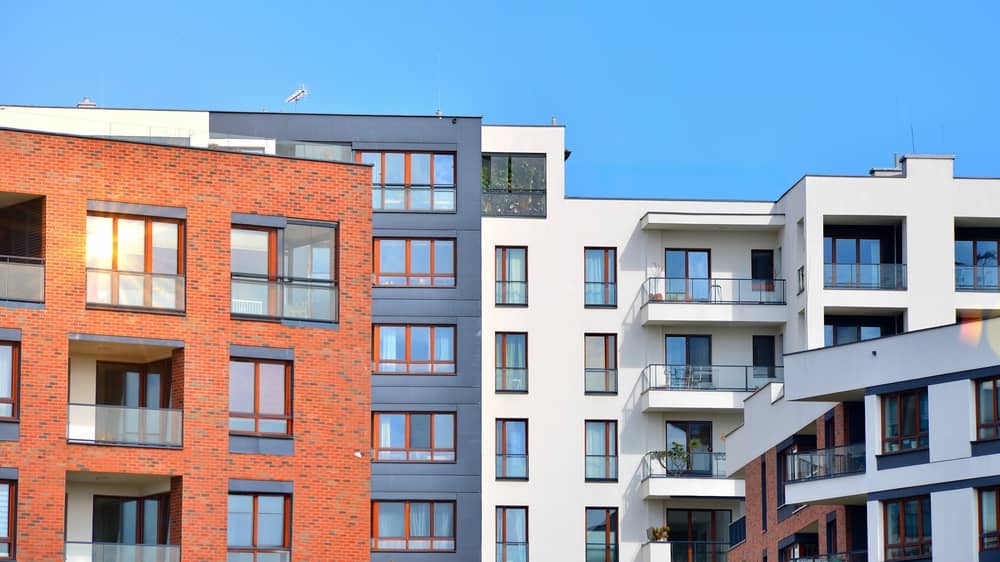
This article explains what build-to-rent is, why it is gaining traction, and what private landlords need to understand about the landscape ahead.
12/06/2026By Sunil Chander · Co-Founder
The rental market is evolving fast, and one of the most significant shifts in recent years has been the rise of build-to-rent (BTR) developments. Once a niche segment, BTR has grown rapidly, driven by institutional investment and changing tenant preferences. Its expansion is reshaping competition in the rental market as a whole and presenting both challenges and opportunities for landlords operating in the traditional buy-to-let space.
This article explains what the build-to-rent market is, why it is gaining traction, how it differs from buy-to-let and what private landlords need to understand about the landscape ahead.
What is build-to-rent?
BTR refers to purpose-built residential developments designed specifically for long-term rental occupancy rather than for sale. Unlike traditional buy-to-let properties, which are typically purchased on the open market by individual investors, BTR assets are developed and owned by institutional investors such as pension funds, real estate investment trusts (REITs) and large developers. The key idea behind this concept is that the entire building or estate is operated as a rental community, often featuring dedicated management teams, on-site amenities like gyms and communal lounges, and services such as maintenance and concierge support.
Growth and drivers in the build-to-rent market
The BTR market has expanded significantly over the past decade. Several drivers have supported this growth, including structural shifts in housing demand, tighter mortgage conditions for first-time buyers, and an increasing preference among tenants for flexible, professionally managed homes.
One of the core forces behind the rise of build-to-rent is the relative stability of long-term rental demand. As attaining home ownership has become more challenging for many people, the private rented sector (PRS) has grown, creating room for large-scale rental offerings that combine quality housing with professional management.
Institutional investors have recognised the appeal of this trend. Their ability to deploy significant amounts of capital and take a long-term investment view contrasts with the more transactional perspective sometimes seen among individual landlords. For these institutions, the rental income profile from BTR projects is attractive, predictable and well-suited to the income needs of large investors.
Key features of BTR properties
BTR developments typically emphasise tenant experience, community and convenience. Some of the defining attributes of BTR developments include:
Dedicated property management
Many BTR buildings have in-house management teams that handle everything from repairs to community events, creating a more service-oriented experience for tenants.
Amenities and services
On-site facilities such as gyms, lounges, parcel rooms and co-working spaces are common. These amenities often position BTR developments in direct competition with newer residential complexes that appeal to professionals and young families.
Professional maintenance
Faster and more responsive maintenance services are a hallmark of the BTR model. Common parts of the building and tenant requests are typically handled by dedicated staff rather than ad-hoc contractors.
Flexible tenancies
Some BTR operators offer more flexible lease terms, including shorter notice periods and options that cater to modern employment trends and lifestyle mobility.
These features often command a rent premium compared to older or less serviced traditional rental properties.
Build-to-rent vs buy-to-let
Comparing build-to-rent vs buy-to-let highlights why BTR has become such a formidable presence in the rental landscape.
| Aspect | Build-to-Rent | Buy-to-Let | | --- | --- | --- | | Ownership | Institutional owners | Individual or small landlords | | Scale | Multi-unit developments | Single property or small portfolios | | Tenant support | On-site management | Landlord or agent responsibility | | Amenities | Often included | Rare | | Lease flexibility | Often flexible and varied | Typically, standard terms | | Investment focus | Long-term rental income | Rental yield and capital growth |
BTR developments benefit from professional management and economies of scale, allowing them to offer amenities and responsive services that many small-scale landlords find difficult to replicate. While individual buy-to-let properties can offer personal touches and flexibility, they may struggle to compete on speed of service, quality of communal facilities and brand positioning.
Another key difference lies in the investment horizon. Institutional owners of BTR properties tend to operate with a long-term income focus, often prioritising tenant retention over short-term rent maximisation. This may contrast with some landlords, particularly portfolio landlords, seeking both rental income and capital appreciation.
Impact of BTR on local rental markets
The growth of the build-to-rent market has not happened in isolation. As more BTR stock enters the rental supply, its presence has begun to shape local market dynamics in several ways.
Increased competition for tenants
In areas with substantial BTR supply, traditional landlords may find competition intensifying. BTR properties often invest in professional marketing, digital leasing platforms and customer-friendly services that appeal to renters accustomed to seamless digital experiences.
Pressure on rental yields and market share
The presence of high-quality BTR developments can also exert downward pressure on rental yields for older or less well-positioned buy-to-let properties. With larger institutions offering competitive pricing and amenities, some traditional landlords may find their properties perceived as less attractive unless they invest in improvements. This competitive pressure on both rent levels and market share is a central theme of the development of the BTR delivery pipeline.
Positive impacts for some landlords
Not all effects are negative. Some individual landlords benefit indirectly from the presence of BTR stock because it attracts renters to certain neighbourhoods, increases footfall and local demand, and helps professionalise the overall rental sector. In some markets, the presence of quality BTR can support broader rental price stability.
Considerations for private landlords
For many landlords, the rise of BTR need not be seen as a threat. Instead, it can be viewed as a market signal prompting reflection on strategy and service standards.
1. Review your value proposition
If your property is competing directly with nearby BTR developments, it is worth examining how it is positioned. Does your property offer features, services or levels of maintenance that justify its rent? Are there improvements you could make that would attract similar tenant segments?
2. Focus on tenant experience
Build-to-rent operator success is partly due to a strong focus on tenant experience. Private landlords can adopt similar principles, including responsive communication, decent property condition and clear tenancy processes, to improve retention and reduce void periods.
3. Niche and local market strengths
Individual landlords often benefit from niche advantages. Smaller properties in desirable neighbourhoods, proximity to community amenities and personal landlord-tenant relationships can be strong differentiators.
4. Leverage digital tools
Where possible, using property management software, digital applications and online payment systems can streamline operations and make your property more attractive to modern renters, even in markets where BTR is strong.
Outlook for the build-to-rent market
The BTR market continues to attract substantial institutional investment. This trend is unlikely to reverse in the short term, as demographic shifts and housing affordability pressures underpin long-term rental demand.
For landlords, understanding this evolution and responding proactively is essential. Rather than resisting the trend, landlords may seek ways to differentiate their offerings, enhance property performance and focus on tenant value.
With steady rental demand across many cities and towns, both build-to-rent and buy-to-let segments can coexist. The key for individual landlords lies in leveraging strengths, such as personal service, tailored experiences and local market knowledge, to maintain competitiveness.
Conclusion
The rise of build-to-rent represents a structural shift in the rental market. The emergence of professionally managed, amenity-rich BTR stock has introduced new competition for tenants and reshaped expectations around tenancy quality and service. However, this evolution does not signal the end of traditional buy-to-let investment. Individual landlords still play a vital role in providing diverse housing options.
By understanding the differences between build-to-rent vs buy-to-let and responding with thoughtful property management and tenant service, landlords can continue to achieve strong outcomes. Rather than touting a single strategy as superior, the growing competition from BTR encourages all landlords to evaluate their market positioning, tenant experience and investment horizon.
FAQs
Q. What is build-to-rent?
A. Build-to-rent refers to multi-unit residential properties designed specifically for long-term renting, usually owned by institutional investors, with dedicated on-site management. It differs from individual buy-to-let properties in scale, services and tenant experience.
Q. How does build-to-rent affect landlords?
A. The increased supply of professionally managed BTR properties can intensify competition for tenants, particularly in areas with many BTR developments. It encourages private landlords to focus on tenant experience and property quality.
Q. Is BTR better than buy-to-let?
A. It depends on your investment perspective. BTR often offers professional management and amenities that appeal to tenants, whereas buy-to-let can offer more control and personalised service. Both have roles within the broader rental market.
Q. Does BTR lower market rents?
A. In some areas, increased supply can influence rent levels and market expectations, particularly for modern, well-serviced stock. However, traditional landlords can still compete by offering strong value and service.
Q. Are tenants choosing build-to-rent over other rentals?
A. Many tenants are attracted to BTR because of convenience, professional management and amenities. However, others still prefer independent landlords, especially where properties are well-maintained and competitively priced.
Q. Should landlords improve their properties in response?
A. Yes, enhancing property condition, communication and tenancy management can help private landlords differentiate and retain tenants, even when BTR options are nearby.
Q. Is build-to-rent only in big cities?
A. While many BTR developments are in larger urban centres, the trend is expanding to regional cities as investors seek stable rental demand.
Q. Can private landlords benefit from BTR growth?
A. Yes, increased rental demand and rising standards across the sector can encourage improvements and elevate the overall attractiveness of rental housing.
Q. Do tenants pay more in BTR developments?
A. BTR properties may command a premium due to services and amenities, but this varies by location and market conditions.
Q. What is the future of build-to-rent?
A. The sector is expected to continue to grow as institutional investment and rental demand remain strong, encouraging traditional buy-to-let landlords to refine their strategies and focus on tenant experience.
Sunil oversees operations and compliance at Pauzible, drawing on his extensive experience as the founder and CEO of Dawnbud Limited, a financial services consulting firm. His prior career included senior roles in investment banking at Smith New Court and NatWest. He holds an MBA from LBS, M Litt from Oxford and a PhD from Cambridge.